|
VERMONT
TRADITIONS COALITION
2011 LEGISLATIVE REPORT
OVERVIEW:
With the retirement of
Governor Jim Douglas and the election of Peter Shumlin as
Governor during the November elections, Vermont Traditions
Coalition (VTC) knew there would be new challenges in the 2011
Legislative Session if we wanted to maintain the gains we made
in the last decade for traditional land use. When the
Legislature adjourned on May 6, it turned out that VTC was
able to make some traditional use advances and fight off a lot
of bad ideas that were proposed this year. However, many of
those ideas will be back in 2012. Vigilance can’t take a
rest, and VTC will need to enter it’s 11th
legislative session next year ready to continue the battle for
the rights and traditions of our coalition of sporting,
snowmobile, farm, maple syrup, forest product, outdoor guide,
and lake association interests. Here’s a rundown of the key
issues from 2011:
TAX INCREASE ON OPEN
LANDOWNERS:
This issue lasted right
down to the final moments of the legislative session for the
third year in a row. In 2009 and 2010, the
Douglas administration, VTC,
the Vermont Forest Products Association, the Vermont Maple
Sugar Makers Association, and others successfully defeated a
proposed tax increase of several hundred percent on farm,
forest product, and maple landowners who sell all or part of
their lands. The tax increase involves land in the current use
tax program that taxes the working landscape for how it is
actually used rather than on the value of the land for real
estate development. Many times the purpose of these land
sales is to make the farm, forestry, or maple business the
land supports more viable, such as trading marginally
productive land for more productive land. Without the current
use program, a lot of farm and timber lands could get
developed, resulting in loss of recreational lands as well as
working lands. While tax increase opponents were successful
in 2009 and 2010, the election of Democrat Peter Shumlin as
Governor changed the political landscape for 2011. Now, both
the heavily Democratic legislature and Governor supported a
tax increase in the current use program. In August 2011, the
formerly successful Current Use Tax Coalition (CUTC) was
resurrected. Nearly all the stakeholders in the 2011 battle
over current use joined the coalition including VTC. VTC made
clear that VTC would be siding with the landowner in all
disputes within CUTC. The political realities of Governor
Shumlin’s election converted landowners from opposing all tax
increases to minimizing tax increases. Finally, after a dozen
CUTC meetings, tax supporters such as the Vermont Land Trust
and Vermont Natural Resources Council and tax opponents agreed
to a compromise. For environmental groups and traditional use
groups to forge a successful compromise on any major contested
issue is pretty remarkable, and many legislators were
pleased. The compromise reduced the 2010 tax increase for
landowners who have been in the current use program more than
12 years by between 100-140%. Under the compromise, the
longer the landowner provides the public with open land
benefits, the less tax the landowner pays for removing land
from the current use tax program for the purpose of selling
for real estate development. The controversy didn’t end with
the CUTC compromise, however. In a 6-5 vote, the House Ways &
Means Committee increased the CUTC tax rates by 60%. The CUTC
stuck to its guns and feverishly worked all angles to replace
the Ways & Means proposal with the CUTC proposal. In the end,
the Ways & Means increase got as far as the Senate. The CUTC
will get opportunities for full Senate consideration next
year, and may succeed in replacing the Ways & Means proposal
with the CUTC proposal.
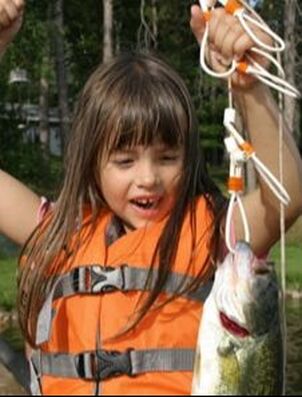
FISHING SUCCESSES:
Republican
Lt. Governor Phil Scott’s 2010
fishing access renovations
program received the support of Governor Peter Shumlin and the
Legislature for the next two years. Lt. Governor Scott
initiated the fishing access renovation program in
consultation with VTC in order to address deferred maintenance
needs of
Vermont’s
existing accesses, expansion of overcrowded accesses and the
need for new accesses. The 2011 Legislature followed up the
$200,000 state appropriation in 2010 with appropriations of
$100,000 for each of the next two years. Altogether, these
appropriations will leverage somewhere near $1.5 million in
matching federal funds. The nationally acclaimed
walleye restoration
partnership between the Department of Fish & Wildlife and the
Lake Champlain Walleye Association won legislative support for
the next two years. The Walleye Association was granted
approval for a $21,150 funding re-allocation in 2011 and
$25,000 for 2012 to continue to upgrade and expand on it’s
highly successful man made walleye rearing ponds. In 2010,
LCWA stocked over 250,000 walleye fingerling and fry into the
Lake Champlain
Basin and
selected inland bodies of water. The Fish & Wildlife
Department supplemented this stocking with stocking of their
own. Walleye population counts and fishing success rates have
taken terrific strides over the last 7-8 years as a result of
this continuing effort. Lt. Gov. Scott, Sen, Dick Mazza
(D-Grand Isle County-Colchester) and Sen. Bob Hartwell (D-Bennington
County)
have championed the walleye restoration partnership in recent
years and again this year. The Shumlin administration
continued retired Governor Jim Douglas’s support for
Vermont ‘s fish
hatcheries with a $1.1 million upgrade appropriation for the
next two years. A good fishery is vital to increasing license
sales which go to back to funding fish and wildlife
management. Top notch hatcheries are essential to quality
fishing and as a strategic means of preventing undue depletion
of native fish populations.
HUNTING SUCCESSES:
VTC and our
sporting allies succeeded in beating back many threats to
Vermont’s hunting
heritage. Two teen suicides resulted in the most aggressive
gun control
effort in quite some time.
Senate Bill 59 and
House Bill 83 would
require gun owners to lock their guns or face jail time if the
guns were used to do human harm even if the gun was taken
without the gun owner’s knowledge. The proponents of the
bills brought in an alleged national expert among other
efforts. VTC’s full time presence and the part-time presence
of the National Rifle Association and other sporting groups
generated some formidable opposition, and the legislation
failed. Gun control advocates will make another push next
year. Some other bad ideas
cropped up to challenge
Vermont’s
sporting traditions. The challenges included bans on bear
hunting with hounds and crow hunting, restrictions on gun club
ranges, unrealistic mandatory noise level reductions on
motorboats, and prohibition of smoking in state forests. None
of these ideas got far, but the fact that ideas like these are
being raised every year illustrates the importance of a
continuing State House presence. VTC keeps an eye on all
kinds of legislation for potential impacts on VTC interests,
and every year we find things that, intended or not, create
bad outcomes. For example, during the course of following the
legislation declaring that wildlife is a public trust that
cannot be owned by any private citizen, we discovered that the
requirement that the Fish & Wildlife Department use deer
management techniques designed to create an
“abundant” deer herd
had been removed from state law. This long standing
policy goes back to the deer population crash decades ago, and
has guided deer management ever since. We brought the issue
to the attention of the Senate Natural Resources Committee,
and the “abundant” deer herd policy omission was corrected.
VTC plans to work closely with the
Shumlin administration
in the legislative off-season. VTC hopes the Shumlin
administration will continue the
Douglas administration’s
policy of aggressive timber management on state land for the
benefit of game species.
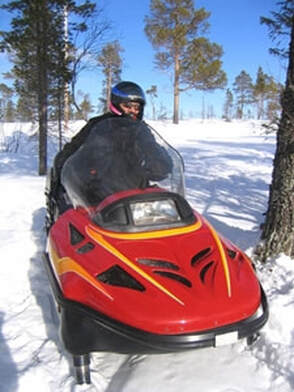
SNOWMOBILE CHALLENGES:
In 2010, VTC
supported the Vermont Association of Snow Travelers (VAST)
attempt to get legislation passed
preventing towns from
increasing tax appraisals for landowners just
because the landowners generously host a trail. In 2009, the
Town of
Canaan had
increased property appraisals for some landowners just because
they hosted a VAST trail. The legislature expressed
displeasure with
Canaan’s practice in 2010,
and passed legislation mandating that all the parties convene,
work out a solution, and report back to the legislature in
2011. The meeting gridlocked, and no solution was worked
out. Legislation was again introduced in 2011, but the
legislature chose to take no action. Unless the
Canaan practice spreads, the
legislature does not appear inclined to take this issue up
because of concerns that addressing this issue would lead to a
variety of other requests for exemptions from the land
valuation process. The
26,000 acre Conte Refuge in Essex County is the
federally owned portion of the former Champion Paper Company
lands. When the federal government purchased this land in
1999, they promised to keep the 40-plus mile snowmobile
network within the Refuge. These trails are the only viable
links from
Northern
Essex
County to the rest of
Vermont, and are crucial to
the
Essex
County
economy and snowmobiling experience.
The Twenty-Year Conte Refuge
Land Plan is currently in the planning stages.
Word got back to VTC that federal planners were considering a
ban on night time snowmobiling. This restriction makes no
sense, because darkness descends early during much of the
snowmobiling season. People would be cut off from camps,
popular riding routes would be eliminated, and businesses
would suffer greatly.
Essex
County’s
number one winter pastime would be disastrously curtailed.
Public input is a large part of the federal land planning
process. VTC and the Champion Lands Leaseholders &
Traditional Interests Association, a VTC member organization,
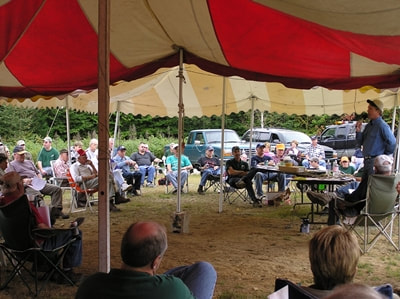
featured this issue at the September 2010 Annual Meeting of
CLLTIA attended by about 140 people. Conte Refuge Manager
Mark Maghini addressed the issue before the crowd, and was
greeted by unanimous opposition to the night time ban. This
process will continue in 2011. VTC will try to stay on top of
potential federal restrictions, and take similar action as
warranted. The public input process has either started or is
about start for several smaller state parks and wildlife
management areas in Southern Vermont, the sprawling Camel’s
Hump
State Park in
Washington and Chittenden
Counties, and Bill Sladyk Wildlife Management Area in
Essex
County.
Some of these parks host snowmobile trails. VTC has been and
will continue to be active in these public input processes.
For most of this century, VAST has been working on
establishing a multi-purpose trail on the former Lamoille
Valley Railroad that runs 93 miles from St. Johnsbury to
Swanton. VAST has been relentlessly challenged every step of
the way by a handful of abutting landowners who are being
funded by the Vermont Natural Resources Council. The abutters
and VNRC have forced this
Lamoille Valley Rail Trail, as it is now called, to
become the first rail trail in the country to go through a
comprehensive state environmental review process. Trails are
supposed to be exempt from
Act 250. However, three District Environmental Commissions
claimed jurisdiction in a 2-1 split decision in 2009. This
will force VAST to go through the Act 250 process at an
estimated cost of $1.8 million . VAST successfully passed a
Resolution in the 2011 legislative session that declares the
legislature’s strong support for the rail trail and urges the
Shumlin administration to support and assist the Act 250
application. Whether to proceed under Act 250 has caused some
internal controversy at VAST, but, as of now, the decision is
to go forward. VTC stands ready to support VAST whenever it
might be needed as this saga continues.
ATV STATE LANDS ACCESS PROCESS
REVOKED:
Within three weeks of
taking office, Governor Shumlin announced that he would like
to revoke the new Douglas Administration rule setting up a
process for three ATV trial trails on state land. The Vermont
ATV Sportsman’s Association, with support from several VTC
member organizations, is attempting to work with the Shumlin
administration on some alternate means of experimental ATV
access. Meanwhile, the Shumlin administration’s anti-access
approach to ATVs raises the issue of whether this philosophy
will spread to other issues such as, for example, the Land
Plans under consideration. VTC hopes to maintain the gains we
made under the
Douglas administration
following the disappointing performance of the Dean
administration. The May 2011 public hearing on repealing the
ATV rule rallied ATV riding supporters outnumbering the
opposition 142 to 6. The written comment period produced 2060
letters supporting responsible ATV access to 1060 letters
calling for repealing the rule and denying any and all
access. 20ll will be an important year for trying to point
access issues in the right direction.
ATTACKS ON PET OWNERS:
H.303 and
H.340 were brought forward by the
Humane Society of the United
States (HSUS) and sponsored by Rep. Tony Klein
(D-East Montpelier). This legislation had been successfully
defeated the last six years and, despite these defeats, it is
back. The legislation, which animal right groups refer to as
the puppy mill legislation,
would essentially define any person who keeps a dog for
breeding purposes or breeds their dog and sells a few puppies
as a “pet merchant.”
Pet merchants would include folks engaged in periodic casual
sales and purchases of dogs, a popular practice with hunting
dogs and other breeds. These so-called “pet merchants” would
be subject to onerous licensing, inspection and tax
requirements. VTC is adamantly opposed to this bill because it
contains no redeeming features, and makes
Vermont virtually
a police state for dog fanciers. The House Committee on
Agriculture had asked VTC to facilitate a conversation with
all stakeholders to work toward a compromise. On March 31st,
many of the stakeholders met for several hours. Dozens of
e-mail conversations resulted from this meeting. Although no
compromise language was agreed upon, everyone hopes to find a
solution that will be reasonable to all, and will help give
law enforcement a tool for prosecuting the most egregious
animal abuse cases involving large breeders. The first step
in this process will be to clean up current statues to make
them consistent and easier to understand. The second step
will be to work to find ways to better educate animal
professionals, town and state officials and consumers on
current animal abuse statutes, consumer rights and properly
recognizing and reporting animal abuse. The Vermont
Federation of Dog Clubs, a VTC member organization, played a
key role in VTC’s 2011 campaign for pet legislation common
sense. Unfortunately, VTC
will be fighting extremist anti-dog owner, anti-hunting, and
anti-animal agriculture legislation from HSUS each session.
HSUS is a wealthy, national organization with full-time
lobbyists in the state house. HSUS was behind a half-dozen
2011 bills alone, none of which have gone anywhere….yet. HSUS
is not alone. Other wealthy regional and national
organizations opposed to significant sporting interests and
other traditional land uses populate the legislative halls on
a daily basis. VTC and our allies must continue to grow and
build so we can continue to protect traditional land uses from
organizations of this nature.
MAPLE SUGAR MAKERS HAVE SOME
SUCCESSES:
The Vermont Maple Sugar
Makers Association, another VTC member organization, faced the
prospect of a candy tax
in 2011. Maple is one agricultural segment that is growing,
and
Vermont’s legislature needs
to do everything possible to maintain
Vermont’s standing as the
leading
United States
maple producer. Maple is the
Green
Mt.
State’s
signature industry, and an important part of our rural
economy. Increasing taxes on maple operations is a step in
the wrong direction. VTC stayed on top of the candy tax
situation throughout 2011. Due to a variety of circumstances,
the legislature is likely to be looking for revenue in 2012.
Like many issues, the candy tax proposal will probably be
back. VTC was also involved in efforts by the Vermont Senate
to improve maple labeling
laws to prevent imitation maple products from using
labels that make their imitation product appear to be 100%
pure maple. However, improvements in labeling laws will need
more time. Vermont Agency of Agriculture personnel need the
extra time to continue work with the federal government to
avoid conflicts between state and federal law. The
legislature did establish the position of
local foods coordinator
within the Department of Agriculture. This position will
focus of building markets for local products, and may be of
benefit to maple.
MAIDSTONE LAKE ROAD
IMPASSE FINALLY RESOLVED: In 2009, VTC and the
Maidstone Lake Association, another VTC member organization,
worked with Lt. Governor Scott, Sen. John Campbell (D-Windsor
County), the
Douglas administration and
others to secure up to $600,000 for rebuilding this gateway
road to the Champion lands. Town and state responsibility and
funding for maintaining this road had gone unresolved for
decades prior to the 2009 legislation. As a result, the road
seemed destined to gradually disintegrate with all sorts of
implications for public travel and water pollution involving
nearby Paul’s Stream. The plan is to keep the road as a
rustic dirt road befitting the area, but to prevent it from
collapsing. The 2009 agreement gridlocked due to a series of
events between 2009-2011 until the House Institutions and
Corrections Committee made a diligent effort to successfully
resolve the gridlock this legislative session. It was a touch
and go situation right up until the final week of the session
when it looked as if the bill would stall in the Senate until
next year. The legislation passed in the final days. The
Town of
Maidstone hopes to
begin road work this year. Rep. Alice Emmons (D-Springfield),
Rep. Bob South (D-St. Johnsbury), Sen. Hartwell, and Sen.
Mazza played leadership roles in the arduous journey this bill
took toward passage.
CONCLUSION:
The 2011 legislative
session went reasonably well for VTC’s interests. However, as
reported above, many issues that VTC and our allies were able
to beat back in 2011 could come up again in 2012. Now that
the legislative session is over, the Shumlin administration
will have time to establish a more comprehensive footprint on
public policies that are argued and decided at the
administrative level. VTC will continue our effort to work
with the Shumlin administration. Where working cooperatively
is unsuccessful, VTC will make every effort to change the
outcome of issues that are the source of disagreement. VTC
will need our entire statewide network to work with us when
called upon in both of these endeavors.

Northwoods Sporting
Journal
|
|
Become A
Sponsor
|